Seeing Differently
On Art Basel Miami and attention being the most valuable currency in the room

This past week at Art Basel, I saw so much art my head is still spinning—but something about this year felt different. Maybe it was the Miami heat, maybe it was the pace I arrived with, but I walked into each fair with a new kind of attention. New eyes. New ears. A different way of taking things in.
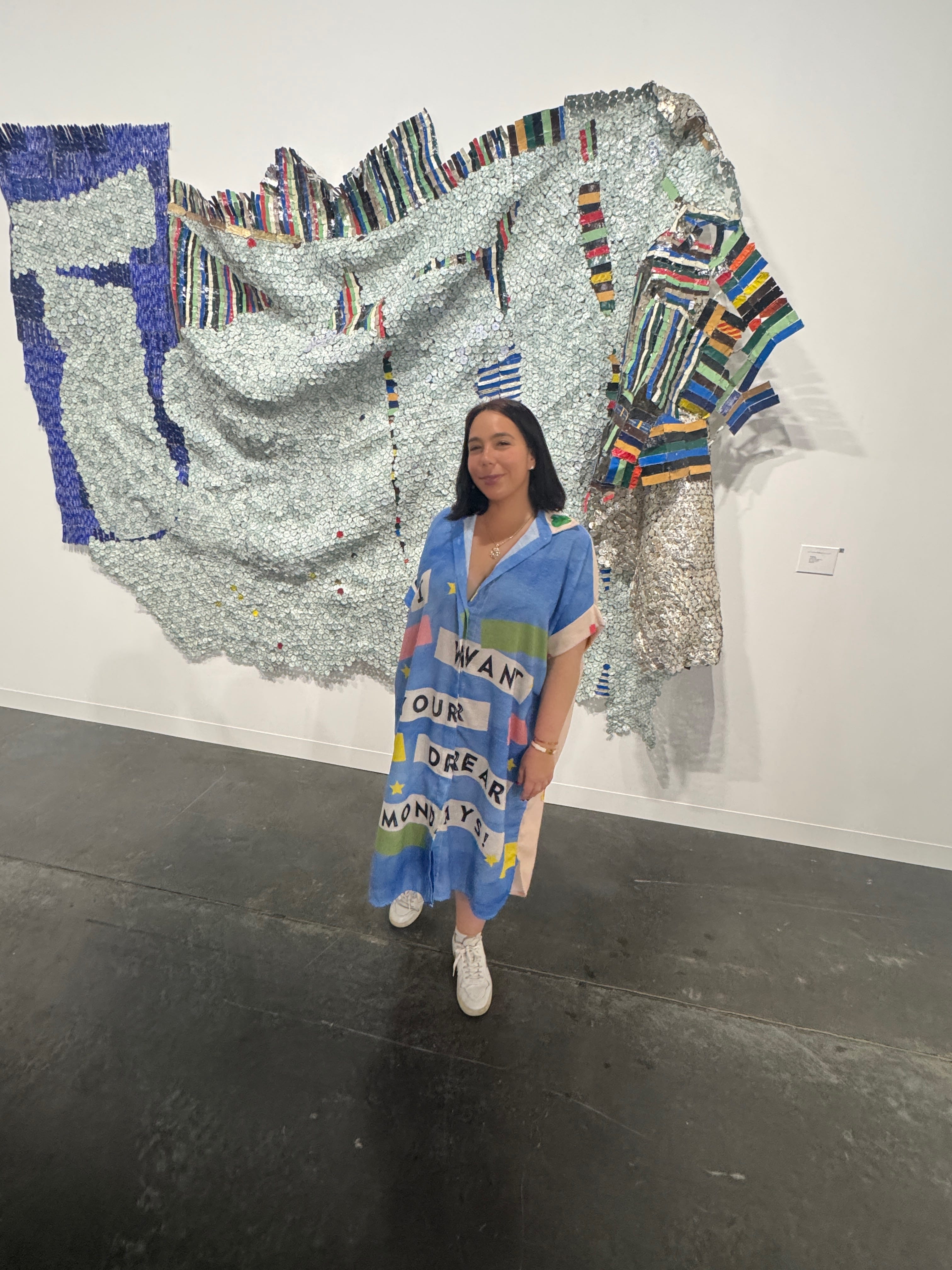
Being there during the VIP days meant I wasn’t just drifting through booths—I was actually meeting the artists. Standing in front of their work with them, feeling the air shift as they spoke about the thing only they could have made. There’s an intimacy to that, a kind of backstage access to the soul of the piece.
And instead of doing what I’ve done in years past—pointing, snapping a quick photo, moving on—I slowed down. I stayed with the work longer than usual. I asked questions. Mostly one question I’ve been circling in my own life lately:
“What is your inspiration?”
Not as small talk.
But as an intimate question of origin.
Of meaning.
Of why this?
Why here? Why now? Why them?
It was the first time I realized that inspiration is not just the spark behind the work—it’s the atmosphere the work is born from. And when you hear an artist talk about their inspiration, you’re suddenly not looking at the art anymore; you’re looking into it.
The Ripple
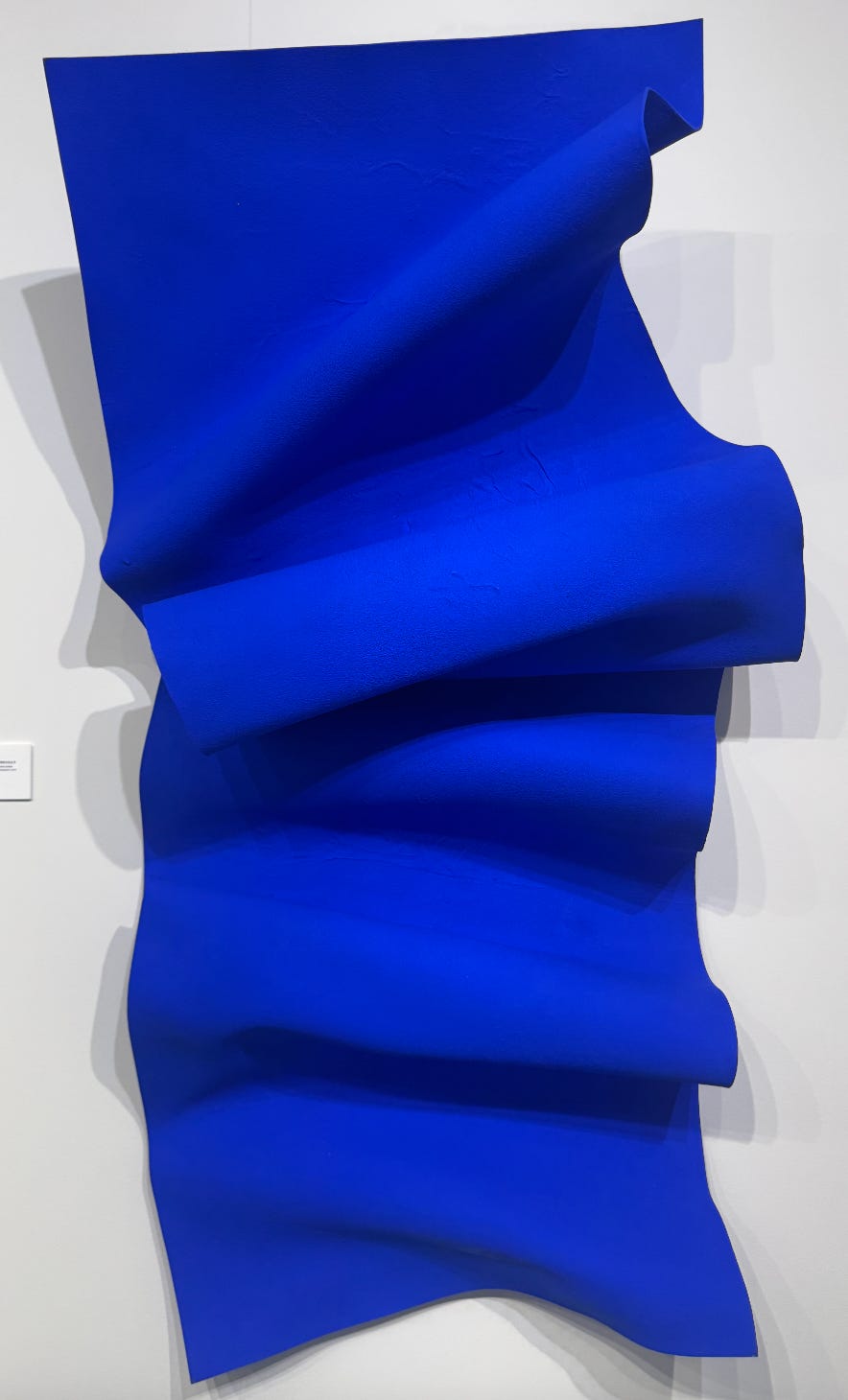
One of the first artists I spoke with was Montana Moore, whose Ripple Effect series stopped me in my tracks. These are thermoformed, cast mixed-media wall sculptures—soft, dimensional, fluid, almost meditative.
When I asked her what inspired them, she said:
“Everything starts with one movement.”
For her, the work is about micro-shifts:
checking in on a friend,
changing a single habit,
making one brave decision,
opening a door you might normally pass by.
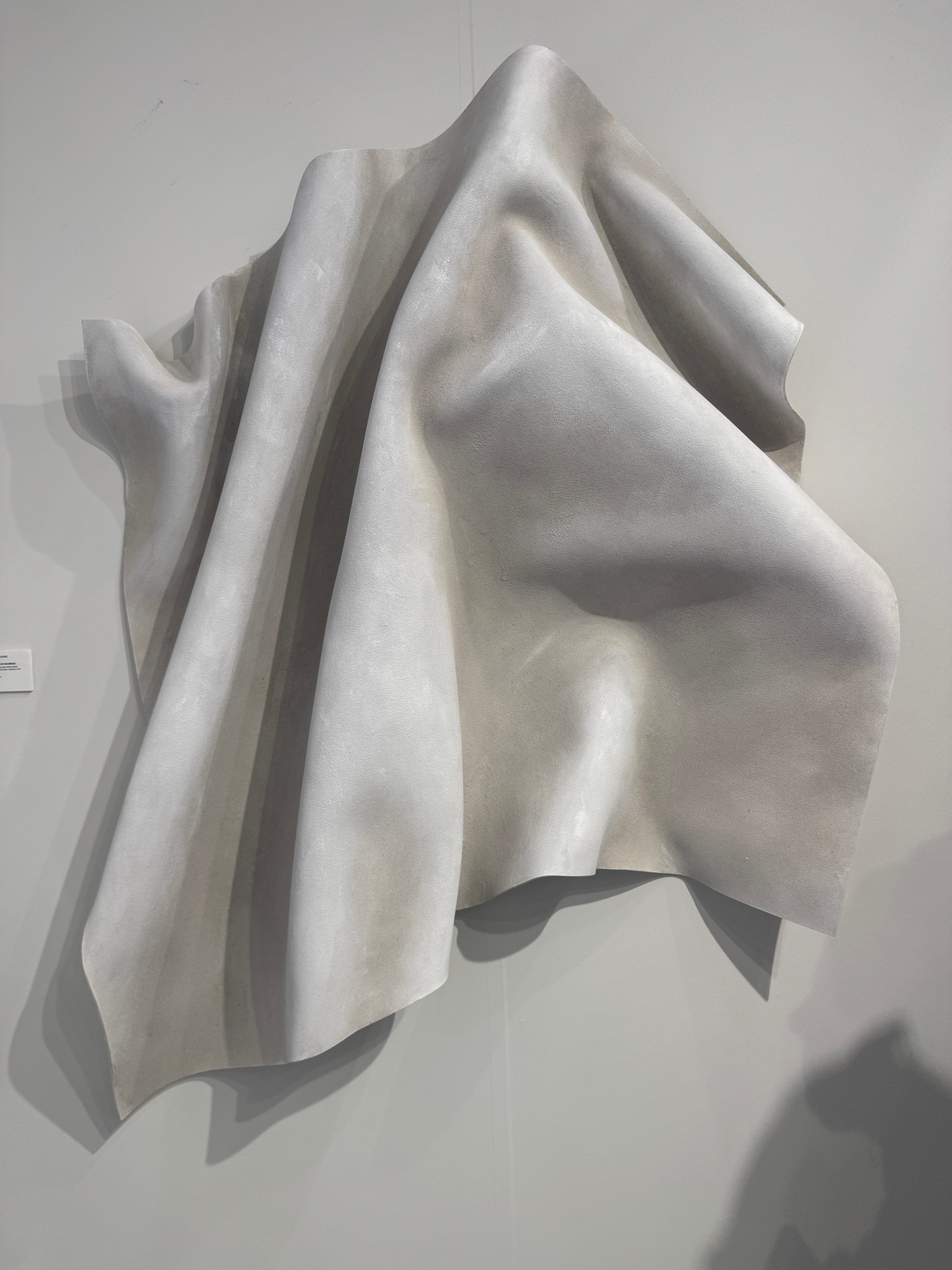
Her pieces look like waves of possibility frozen mid-expansion—quiet diagrams of how life actually changes. You see the ripple, and suddenly you understand the truth of it: what begins small can alter everything.
A ripple is only small at its start.
Creation
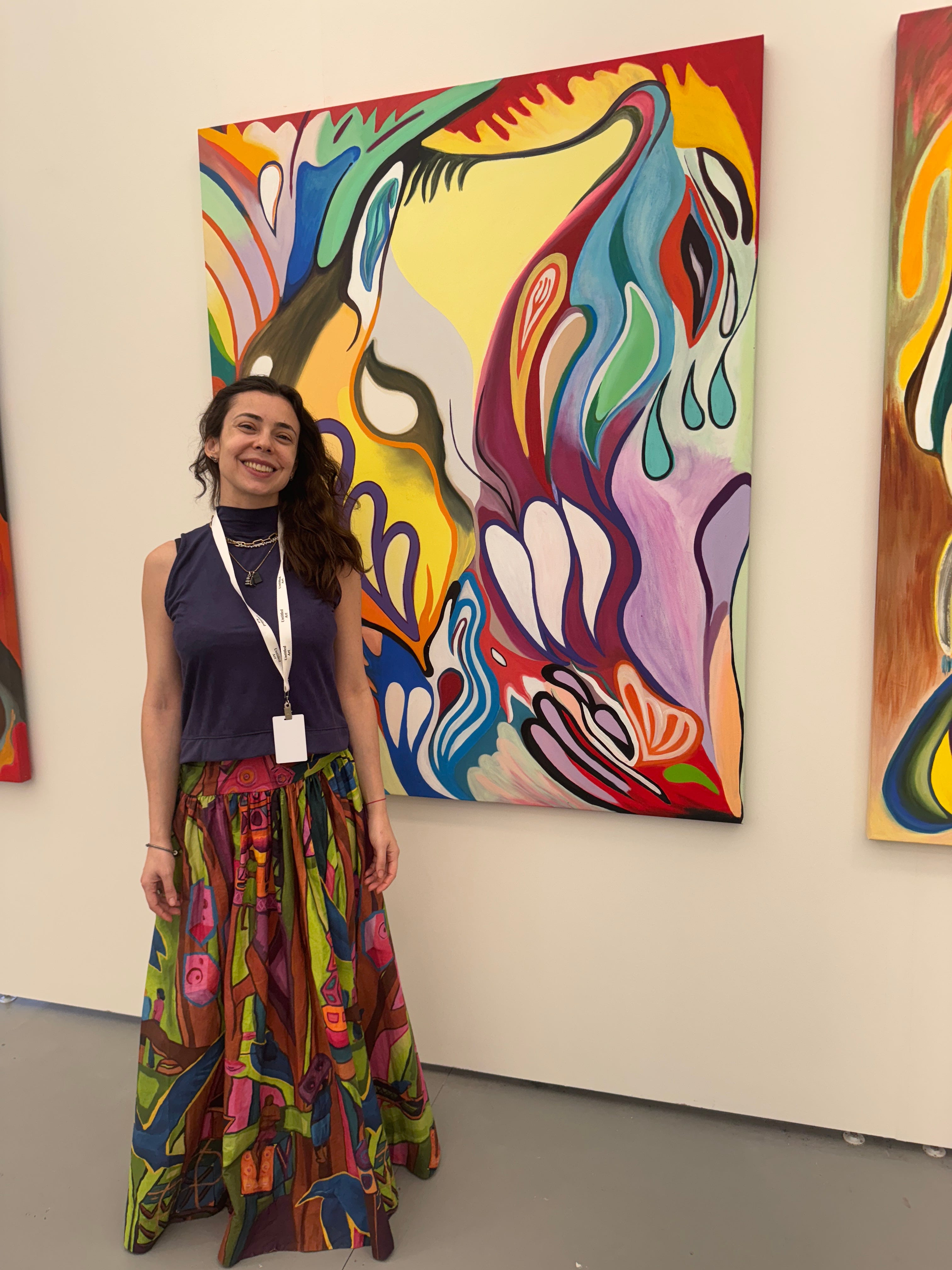
Later, I stood in front of Brazilian artist Diana Mota’s paintings—works that felt alive, in motion, like something trying to make itself known. I told her I saw wings, petals, something blooming.
She smiled and gently corrected me:
“It’s a flame,” she said. “The whole series is about creation.”
And instantly, the entire piece shifted.
A flame doesn’t settle.
It flickers, morphs, stretches, collapses, rises, reshapes.
It’s creation in its rawest form—constant becoming.
Diana told me she isn’t trying to depict anything recognizable. She’s painting the moment before recognition—the threshold where something is taking shape but hasn’t yet committed to an identity.
Once she said it, I stopped trying to name what I was seeing.
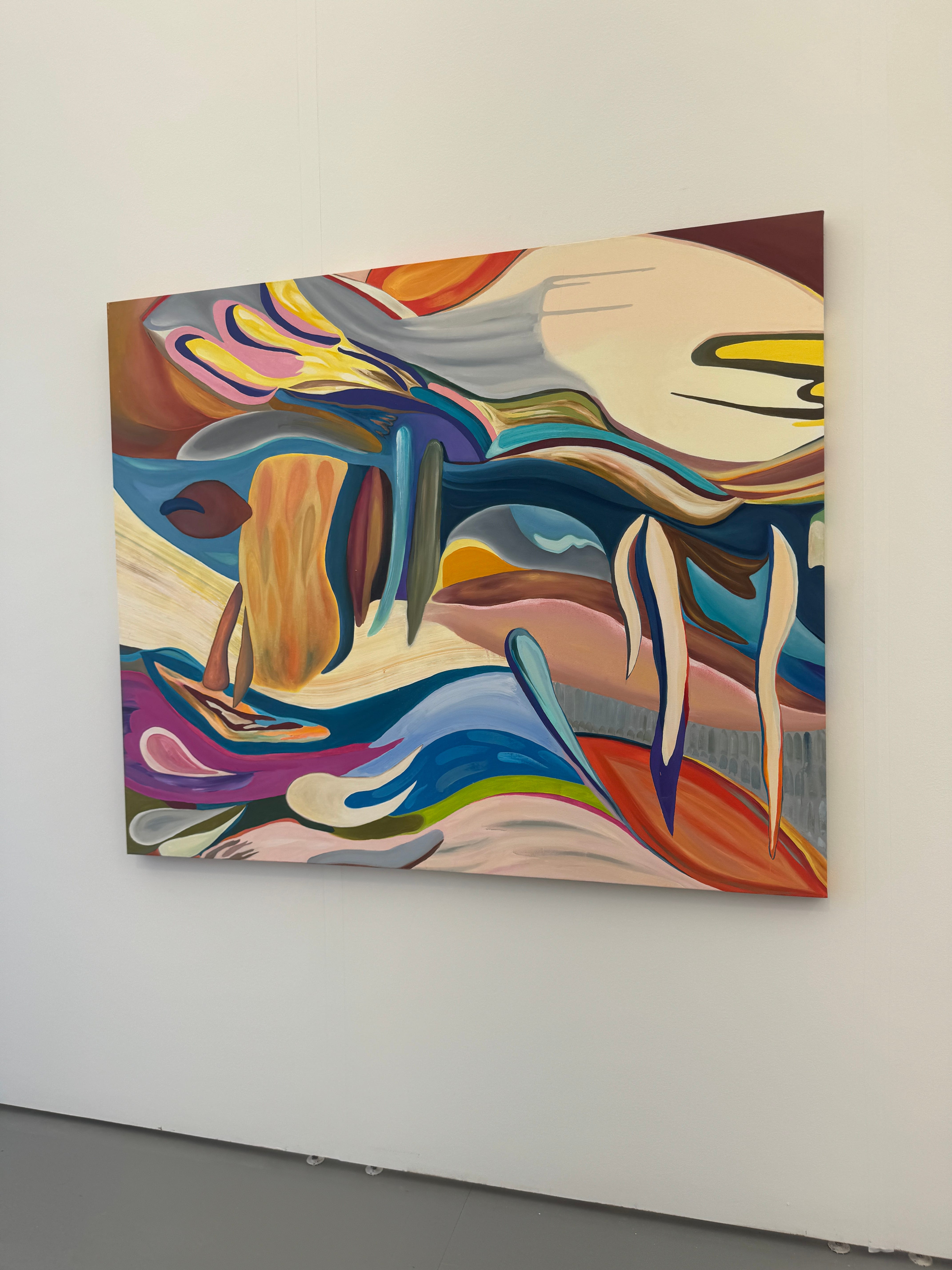
Her work wasn’t floral.
It wasn’t figurative.
It was emergence.
Creation not as imagery, but as energy.
The spark before form decides what it wants to be.
It made me realize how often we rush to define what we’re looking at.
When sometimes the truth is simpler:
we’re not witnessing what something is.
We’re witnessing what it’s becoming.
The Wind
And then there was Refik Anadol’s Winds of Yawanawa—a work I didn’t just look at, but felt. Maybe because the Amazon has become so dear to me this year. Maybe because I now understand the spiritual intelligence of that land—how it rearranges you, teaches you, softens you.
I was lucky enough to meet Refik at the Institute of Contemporary Art in Miami, and we ended up speaking about our time with the tribes of the Amazon—how differently they live, how deeply they listen, how much of their wisdom is environmental rather than verbal.
When I told him how much the piece moved me, he smiled and said:
“I hope you feel the energy of the forest.”
I did.
I still do.
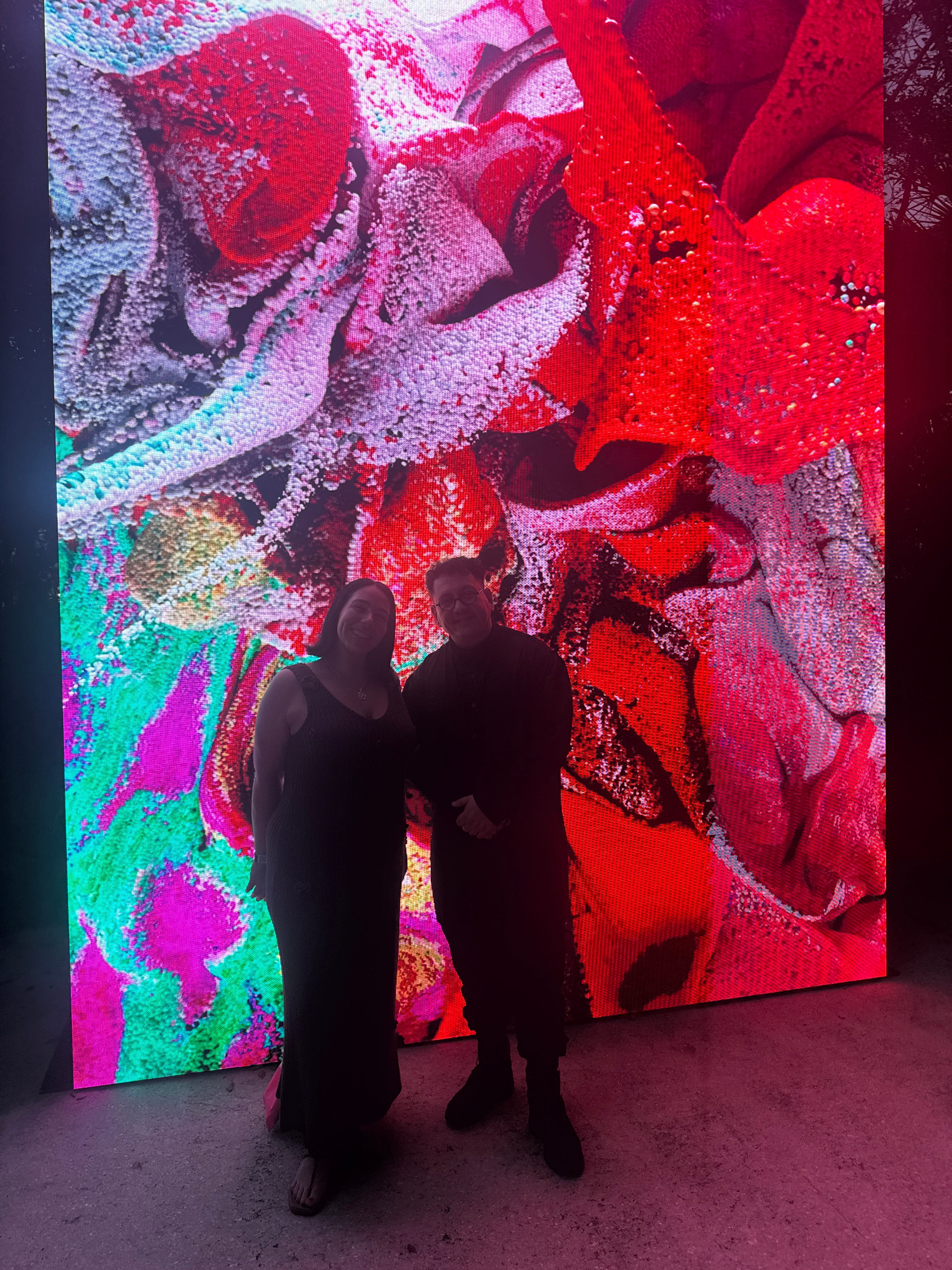
The work uses actual wind data from the Amazon—speed, direction, atmospheric movement—translated into color and motion, layered with the cultural language of the Yawanawa people. It feels like standing inside the memory of a landscape.
And then I learned the piece sold for $1.5 million, with all proceeds going directly to the Amazon rainforest.
Art as ecosystem.
Art as reciprocity.
Art as devotion to a place.
It reminded me that inspiration isn’t always personal.
Sometimes it starts in the land itself.
Sometimes in ancestry.
Sometimes in forces far older than our own imagination.
What I Carried Home
Three artists.
Three origins.
Three different ways inspiration takes shape:
the ripple,
the flame,
the wind.
One teaches you that a small shift can redirect everything.
One shows you that creation is a living force, not a finished form.
One reminds you that inspiration can be ecological, ancestral, and bigger than any one artist.
I left Basel realizing I wasn’t collecting images—I was collecting beginnings:
the movement behind the form,
the force behind the shape,
the energy inside the work.
Because inspiration isn’t always a spark.
Sometimes it’s a shift.
Sometimes it’s a current.
Sometimes it’s the subtle pull toward what wants to become.
💌Elle
P.S. I have approximately a million Basel thoughts and an overflowing list of trends I spotted this week. If you or your team want the download, let’s meet—happy to spill all the tea, the trends, and the takeaways.